
Colombo Court Blog Colombo
Seven Sinhala phrases that will make your trip easier
English will get you anywhere in Colombo. A few words of Sinhala will get you a bigger smile, a better price and, occasionally, a second cup of tea.
Sri Lanka has two national languages, Sinhala and Tamil, and English is spoken widely in Colombo and wherever visitors go. You will not need a phrasebook. But Sri Lankans are delighted when a visitor tries, and a handful of words changes the temperature of every conversation. These are the seven our front office would teach you first.
The seven
Ayubowan (ah-yu-bo-wan). The greeting, said with the palms together. It means “may you live long”, and it works for hello and goodbye, morning and night. This is the one to learn.
Bohoma istuti (bo-ho-ma is-tu-ti). Thank you very much. Use it constantly.
Karunakara (ka-ru-na-ka-ra). Please. Put it at the start of a request and watch how it lands.
Mata therenne naha (ma-ta the-ren-neh na-ha). I don’t understand. Said with a smile, it gets you a slower, clearer answer and usually someone who speaks English.
Ingrisi katha karanawada? (in-gri-si ka-tha ka-ra-na-wa-da). Do you speak English? Useful in markets and small shops.
Meeka keeyada? (mee-ka kee-ya-da). How much is this? The start of any negotiation at Pettah, and the moment the price drops a little because you asked in Sinhala.
Kaema (kaa-ma). Food. Point and say it, and someone will show you where to eat.
Two more, for good measure
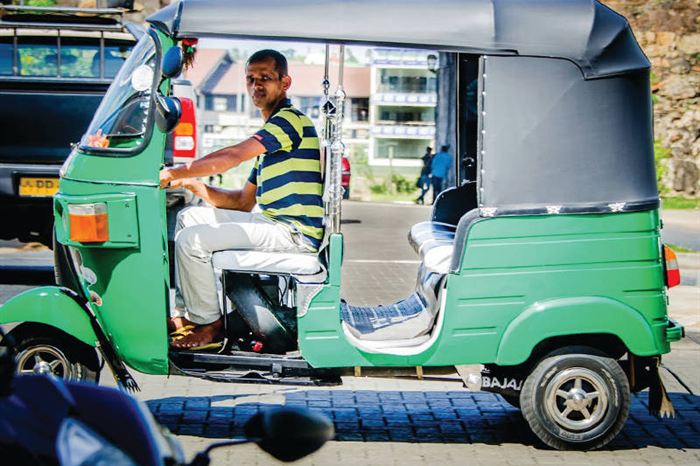
Hari means OK, and you will hear it a hundred times a day. Kohomada? is “how are you?”, and the answer is hondai, good. Tuk-tuk drivers are the most patient teachers in Colombo; a ten-minute ride is a free lesson.
Once you have the words, here is how to get around, and here is where to go.