
Colombo Court Blog Food & Drink
A short guide to Ceylon tea
Why the country is Sri Lanka but the tea is still Ceylon, how growing altitude affects the flavour, and how to buy good-quality tea to take home.
The country has been called Sri Lanka since 1972, but its tea is still sold as Ceylon because the name is so well known. Sri Lanka is one of the world’s great tea origins, yet much of its tea leaves the island in blends sold under other brand names.
Altitude is the thing
Ceylon tea is classified by the altitude at which it is grown, and the difference in flavour is real. It is the most useful thing to know.
High-grown, above 1,200 metres: Nuwara Eliya, Dimbula and Uva. Light, brisk and floral in the cup. Nuwara Eliya is the lightest and is often called the champagne of Ceylon tea. Uva has a distinctive sharp flavour, which comes from the dry winds of July and August.
Mid-grown, 600 to 1,200 metres: Kandy. Fuller and coppery, with a straightforward flavour. A reliable choice.
Low-grown, below 600 metres: Ruhuna and Sabaragamuwa. Dark, malty and strong. This tea keeps its flavour when milk is added, and much of it is exported to the Middle East and Russia rather than to Britain.
The letters on the packet
BOP, OP, FBOP, Pekoe and Dust describe the size of the leaf, not its quality. OP is a long whole leaf that brews gently. BOP, broken orange pekoe, is a smaller leaf that brews faster and stronger, and most good Ceylon tea served in a pot is BOP. Dust is used in teabags. It is not poor tea; it simply brews the fastest.
A lion logo holding a sword on the packet is the Sri Lanka Tea Board mark. It shows that the tea was grown, processed and packed entirely in Sri Lanka. Look for it when you buy.
How it is drunk here
Tea is usually served strong, and often very sweet. Plain tea is black tea with sugar and no milk. Kiri te is tea with milk. At roadside stalls, tea is poured from a height between two vessels to cool it and make it frothy, which is enjoyable to watch.
It is also useful to know that tea is offered often, and accepting it is the friendly response.
Buying some to take home
Avoid buying at the airport, where tea can cost three times as much. Buy from a specialist tea merchant in the city, choose a single-estate tea rather than a blend, and ask for it to be vacuum packed. A good shop will let you smell the leaves before you buy.
Whole-leaf tea stays fresh longer than dust on a long journey. If you buy only one tea, choose an Uva from the July or August harvest.
Trying it here
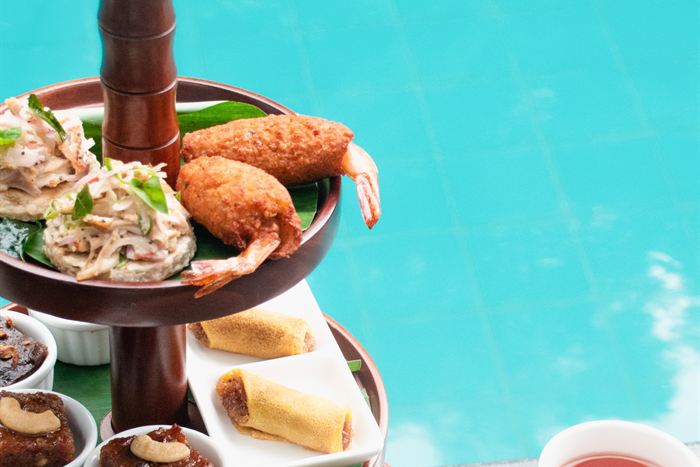
High tea is served daily from 15:30 to 18:30 at LKR 2,900 net per person, and the price includes a pot of tea. Ask our team which estate your tea comes from.